• RSS
  • Facebook
  • Twitter
Tampilkan postingan dengan label Technology of Business. Tampilkan semua postingan
Comments


Some of the Middle East's most highly prized archaeological treasures are under threat from the extremist militants of Islamic State (IS).
So archaeologists are desperately trying to record as much of these sites as they can.
And, in contrast to Indiana Jones and its low-tech bullwhip, they're using the latest technology to do it.
But it may already be too late for the ancient city of Palmyra in Syria. This once-rich oasis straddling age-old caravan routes, featuring colonnaded porticos and the sleek sandstone Tower of Elahbel, fell to IS on 21 May 2015.
The city is now strewn with landmines.
And according to reports, the militants promptly destroyed the 1,900-year-old Lion of Al-lat statue.

Digital ghosts

No wonder archaeologist Roger Michel is in a hurry to preserve - if only in digital form - the relics lying in the militants' onward path.
Mr Michel's team from the Institute of Digital Archaeology - a joint venture between Harvard University and the Classics Conclave - is hoping to flood the area with 3D cameras and enlist local partners to photograph as many items of historical interest as they can.
"If we can get 5,000-to-10,000 [3D cameras] in the field in the next three or six months," he says, "then, if we can't protect these things at the ground, we can at least preserve a highly detailed record of what's there."
He is relying on a patchwork of local museums, non-governmental organisations and volunteers to carry out the digital archiving.

But taking and uploading complex photos in hot, desert conditions where internet access is patchy is challenging.
The cameras need to be robust, have a long battery life and be capable of uploading large files.
"We're working a lot on the battery, since there will be limited access to electricity," Mr Michel says.
They have partnered with New York University's Institute for the Study of the Ancient World to store the 3D images, and with Massachusetts Institute of Technology Three Dimensional Printing Laboratory to print them.

View from the air

The threat from IS has added a new urgency to archaeologists' attempts to record mankind's cultural history.
The Universities of Oxford and Leicester have been using satellite imagery and aerial photography as part of a project called Endangered Archaeology in the Middle East and North Africa.
The £1.2m project will create an open-access database, registering information about each site and its condition, all in easily accessible Geographic Information System [GIS] format.
Remote monitoring is particularly useful in war-ravaged countries like Syria, Iraq, and Libya where on-the-ground surveys are dangerous.
[...]

Comments

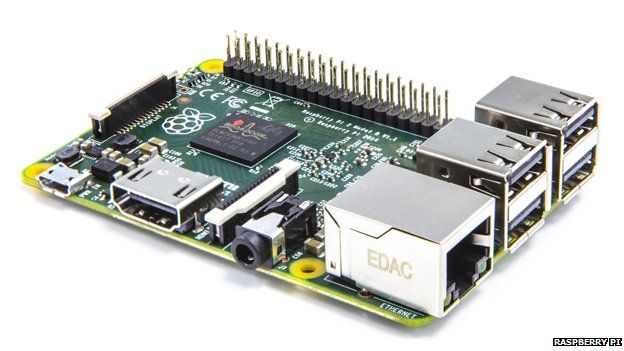
It has been three years since the credit-card sized Raspberry Pi launched.
The Pi, and its community web pages, try to tempt the public and students to burrow beneath the bonnet of their computers, beyond Facebook, and try their hand at coding.
And with five million sold, it is today Britain's fastest-selling personal computer, a $35 (£25) successor to kit - or unassembled - computers like the Heathkit H8.


Eben Upton, Alan Mycroft, and four other academics at the University of Cambridge's Computer Laboratory had noted a decline in skills and numbers of students applying to read Computer Science.
Twenty years before, applicants would have been avid tinkering hobbyists; lately, they may have only done a small amount of web design.
The European Commission has predicted a shortfall of 900,000 adequately skilled programmers and other technology professionals in Europe by 2020.
So the sextet founded the Raspberry Foundation as a charity to revive Britain's garage-geek spirit.
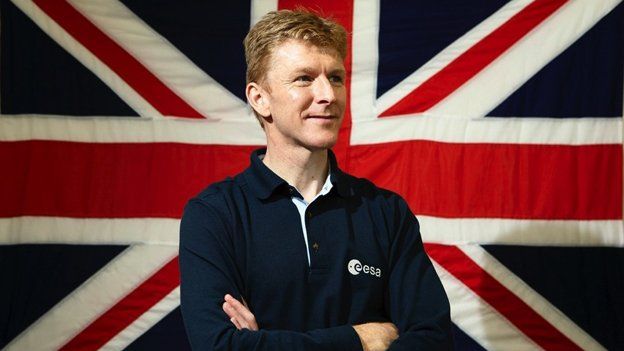
When British astronaut Tim Peake heads to the International Space Station this November, he will bring two augmented space Raspberries, called Astro Pis.
They will run experiments devised by primary and secondary school students, says Dr Upton, Raspberry's chief executive. The older students will also code them.

Programming 2.0

Programming is changing briskly.
Coding in the cloud is one trend likely to carry on, spreading collaborators across continents.
So also is the explosion of new languages, like Facebook's Hack scripting language or Apple's Swift, alongside classical tongues like C and Java.
We're likely to learn to code younger, and differently. The has 6.2 million registered users.
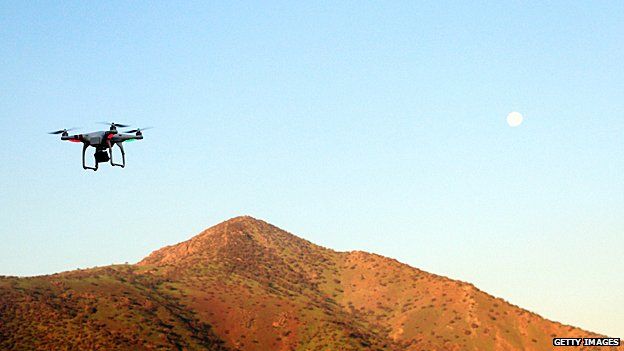
The Internet of Things, driverless cars, and drones will all yield more programmable platforms - but will coding for your cappuccino maker drastically change programming?
And what will the coding workplace be like, when today's Raspberry rugrats have grown into tomorrow's programming prodigies?

One interesting facet of the last 15 years is how little programming languages have changed.
Then and now, C and C++ dominate programming at deep, or highly-optimised levels.
One level up, C-derived languages - objective C and ones resembling C in syntax, like Java and Microsoft's C# - are in fashion for running most applications.
Then at the top, there is a big brace of scripting languages, like Perl, Python (named after Monty Python), and PHP, which is often used as glue for sticking together programmes to build a complete system.
Scripting languages live in a rich environment, with large numbers of links to other programmes, says Daniel Kroening, professor of computer science at the University of Oxford.
[...]

Comments

"Write Reviews Get Paid", screams the advert.
This might sound a theatre critic's dream, but Craigslist's "Get $5 for Yelp review" leaves less room for such notions.
It's the seamy side of an online reviews industry which has enticed clickfarms in Bangladesh, lawyers in London, and New York's Attorney General.
And now, the UK's Competitions and Market Authority (CMA) as well, which is opening an investigation using its consumer enforcement powers, and pondering further action.
The CMA is also planning an international project on online reviews and endorsements, to coincide with Britain's year-long presidency of the International Consumer Protection and Enforcement Network, which starts 1st July.
It's big business, these new crowdsourced yellow pages of the internet. A hearty 62% of British consumers say they are likely to be affected by positive online reviews - with negative ones, that soars to 89%.
[...]

Comments

It's often said that green technology, or cleantech, has become a no-go area for investors, but is that really true?
Certainly investors ploughed billions into electric cars, solar panels and futuristic batteries during the last decade, hoping to get rich while weaning us off fossil fuels.
And pretty soon the sector overheated, share prices toppled and investment tailed off.
But while we still live in a world dominated by fossil fuels, environmentalists have a lot more to be cheerful about.
Global investment in clean energy was last year back near its 2011 peak at $310bn (£200bn), up from $60bn in 2004.
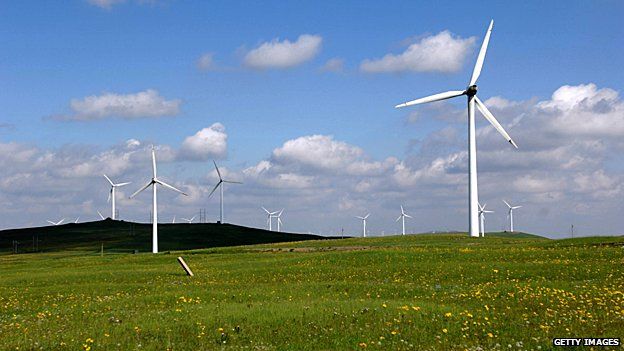
And the price of clean technologies has plummeted, explaining why more wind and solar power was generated in 2014 than any year previously.
Partly driving the trend is the spread of clean energy in developing countries, says Angus McCrone, chief editor at Bloomberg New Energy Finance.
Reflecting that China invested $89.5bn in the sector last year (up 32%), Brazil $7.9bn (up 88%) and India $7.9bn (up 14%).

"We've got to the point where in 2014, developing countries almost caught up with developed countries in terms of overall dollar investment," Mr McCrone says.
"In some places it's happening without any subsidy support too."
Big business and governments have also increased their support for clean technology - through venture investments in innovative start-ups and subsidies like tax breaks respectively.
"Without them the industry would be in a much tougher position," says Frans Nauta, deputy director of entrepreneurship at Climate-KIC, an EU-funded programme that supports cleantech start-ups.

Start me up?


Perhaps the only piece of the puzzle missing is venture capital (VC) investment, which is significantly down from its peak.
During the last decade, many Silicon Valley VCs dived into cleantech with little understanding of the sector and hoping for quick returns.
Instead they found a slow-moving and highly competitive market, and few were surprised when billion-dollar businesses such as biofuel producer Kior and solar power company Solyndra subsequently went bust.
"In a way it got overhyped and perhaps too many ideas got funded," says Richard Youngman, managing director, Europe & Asia at the Cleantech Group.
"In a world where hype can be a bad thing, a more sober existence was needed."
But Mr Nauta believes the absence of VCs is a serious problem, particularly in Europe.
That's because they are more likely to invest in the most disruptive (and risky) early-stage businesses that are vital to innovation.
"Take solar - I still see incredible opportunities for disruption, whether it's improving the efficiency of the panels, their production, their installation or in terms of financing," he says.
"But while I know many companies making strides in this area, they don't have enough access to funding."
[...]

Comments


The machines may soon be taking over the reception desk.
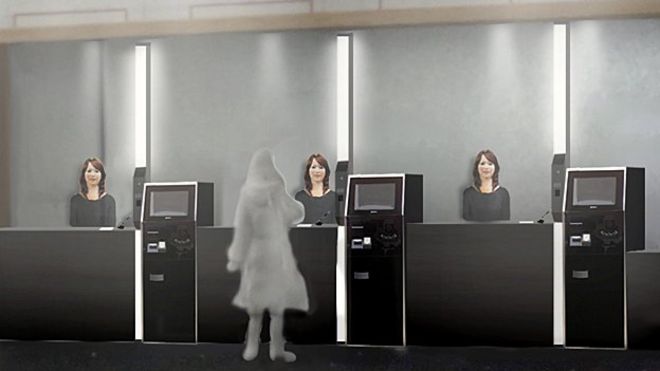
In July, the Henn-na Hotel will open in the city of Sasebo, Japan, and its owners hope this will be a new frontier for the hospitality industry.
It will be staffed by 10 life-like robots, with only two flesh-and-blood staff members on the premises.
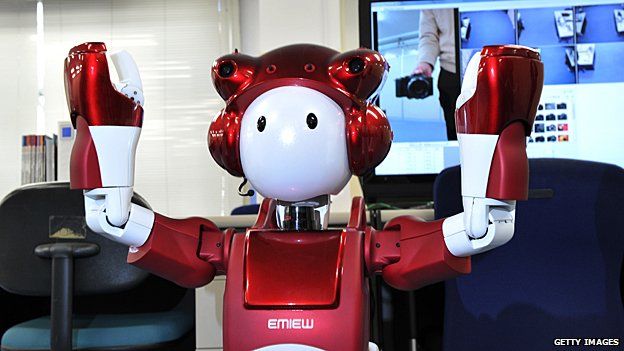
The robots will greet guests, carry bags, and even clean rooms once a guest leaves. Complete with an eerily realistic female face, they are designed to speak several languages and respond to guest enquiries in the 72-room hotel.
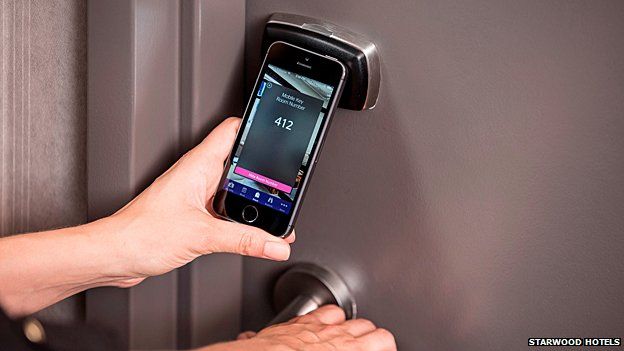
The aim is to create an all-round hi-tech experience, including facial recognition software to open doors.
While not every receptionist or bellboy is under immediate threat from an imminent robot uprising, the wider hotel business is embracing new technologies.


Check it out

GTRIIP, a start-up founded in Singapore that has opened offices in the US, has developed a documentless check-in service using the iPhone's biometric features.
Guests can securely check in at participating hotel chains using Apple's Touch ID fingerprint recognition technology to access the booking details saved on their device.
At the hotel, receptionists have their own "kiosk app" for checking in guests.
Co-founders Maxim Thaw Tint and Stanley Myo Lwin, both frequent travellers, were frustrated with time-consuming hotel processes and the need to carry multiple IDs or reservation documents.
"When we researched the existing biometric technologies we found that the Apple Touch ID is out there since 2013 together with the iPhone 5S," says Mr Thaw Tint.
"We decided to leverage on this because we don't want to reinvent the wheel."
GTRIIP is of particular interest to business travellers, says Mr Thaw Tint, who will often choose the same hotel group, due to their loyalty program.

"[This] is good for pre-verified Touch ID," he says.
The start-up is already working with hotels in the US, Singapore, Sri Lanka, India, and Myanmar.
[...]

Comments


Ever found yourself wondering whether your boss is human?
Haven't we all.
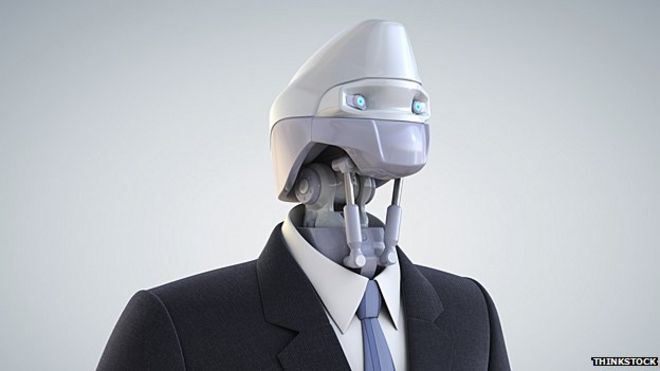
Now, with the march of artificial intelligence and robotics, it's becoming an increasingly valid question.
Algorithms - problem solving computer programmes - are, to put it bluntly, getting much better at doing our jobs than we are.

And it's not just in the tech sector where computers are becoming king.
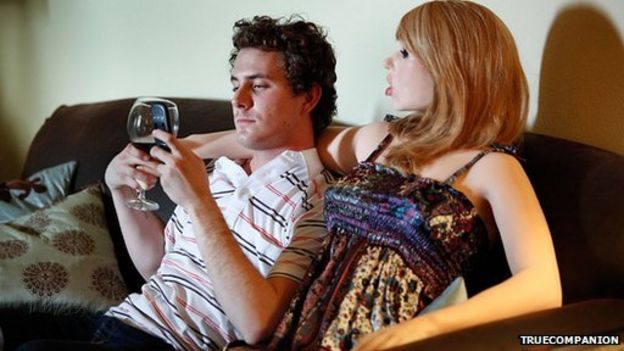
School children in South Korea are being taught English by a machine called Robosem, and even the so-called oldest profession faces competition - a US firm called TrueCompanion claims to have developed the world's first sex robots, with the most basic model costing just $995 (£645).
But is there a danger that this brave new world is going to be a bit, well, dull?

Movies by numbers

The entertainment industry has already adopted an algorithmic approach to working out what we want to watch.
When TV and movie streaming service Netflix decided to start commissioning its own material, it turned not to Hollywood veterans, film critics or media forecasters, but to algorithms and user data.
A data trawl of the most-watched and loved content streamed by Netflix customers revealed three key ingredients - actor Kevin Spacey, director David Fincher and political dramas produced by the BBC .
So the firm commissioned a remake of 1990 BBC political thriller House of Cards, starring Kevin Spacey and directed by David Fincher. It became the first ever web series to win a prestigious Emmy award, with the first series receiving nine nominations.

"House of Cards is the most famous example of a data driven approach to creativity," said Luke Dormehl, film maker and author of The Formula: How Algorithms Solve All Our Problems, and Create More.
"Netflix commissioned an unprecedented number of these episodes - and paid upfront - rather than going down the traditional route, where you shoot a pilot, present to executives etc."
It is perhaps no wonder the company keeps its lucrative viewing figures and ratings information such a closely guarded secret - it has never made them public.
London-based firm Epagogix offers an AI analysis of movie scripts to predict how successful they are likely to be at the box office. It even claims to be able to identify "improvements" to boost a film's commercial value.
In theory this eliminates every film maker's worst nightmare - the expensive flop.
"If a film needs to make £10m and it makes £5m [at the box office] we say it's bombed," said Mr Dormehl.
"But if we had that data in advance and said, if you spend half the money making it, it will still make £5m... it opens the way for making mid-range films."
But where's the excitement, the joy of the surprise hit or chance discovery of the new?
Luke Dormehl says it opens up a world of different opportunities.
"As a film maker I think there are plenty of exciting possibilities," he said.
"It's exciting to have a script where you can tap into that data. Which scenes remind people of good times, which music cues do they like, when do they get up to make the tea....
"I'm excited about the possibility of films that change direction depending on who is watching them, or change narrative if you're not paying attention."
[...]

Comments


For the workers of today, the future can look bleak.
Retirement is an ever receding distant dream - probably just as well, as the pension is probably more likely to cover a week in Southend rather than a grand world tour.
Then there's the always present danger that if your manager isn't replaced by a machine, you may well be.
But that's not the whole picture - technology can be the great leveller, a transformational entity that could alter society and the future workplace for the better.
So which is it - shiny tech-driven utopia, or something more reminiscent of Bladerunner?
To round off a month looking at the future of work, I spoke to several experts who have contributed to technology of business over the past few years and found out if they had changed their view of the future.

Dave Coplin, Chief Envisioning Officer, Microsoft UK

I'm not sure my vision of the future of work has changed much per se, not in a visible way at least.
My hope remains that technology will increasingly afford greater freedom in where, when and how we work.
But, I think that the biggest change that is yet to come lies with how companies address the cultural and organisational challenges. These must be overcome, in order for the incredible opportunities that are offered by transformational technologies to be able to take effect.
The success of the future of work will come down to one thing. People.
It will be the extent to which the people are engaged with the "purpose" of their organisation that will dictate the success or failure of that organisation in the future.

Engaged employees embrace change, they look for growth and learning in all they do and best of all they unleash the full potential of new technology.
They do this by using it to find new ways of working rather than simply making the old ways of working happen a bit quicker.
In ten years' time, I hope we will have broken free of many of the physical ties of our current working world.
I hope that employees, engaged and empowered with the purpose of their organisation, will use the incredible advances offered by new forms of interaction, like holograms and displays that offer "high empathy presence" where more of our body language can be conveyed to enable us to collaborate more effectively wherever we are.

It would be foolish to think that any of this would replace the pleasure or efficiency of being there face to face.
[...]